
TMS consultation · Screening first
TMS, explained plainly.
TMS uses a magnetic coil near the scalp to deliver brief magnetic pulses to brain regions involved in mood. No anesthesia, no sedation, and you drive yourself home.
How it works
Magnetic pulses, targeted at mood circuitry.
Transcranial magnetic stimulation has been FDA-cleared for major depressive disorder since 2008. A coil rests near the scalp and delivers repeated magnetic pulses to targeted regions involved in mood regulation, motivation, and emotional processing. Over a course of sessions, the goal is to change activity in those networks.
You're awake and seated the whole time. The pulses feel like tapping on the scalp, and no sedation or recovery period is involved, which is a large part of the appeal for people who've had a rough ride with medication side effects.
A typical course
TMS is delivered as a series of brief sessions, usually on weekdays over several weeks. Your exact schedule gets mapped at the consultation, and you can generally return to work or your day right after each session.
Response varies. Some patients notice improvement during the treatment course, while others need more time.
The equipment
Two FDA-cleared systems, one screening standard.
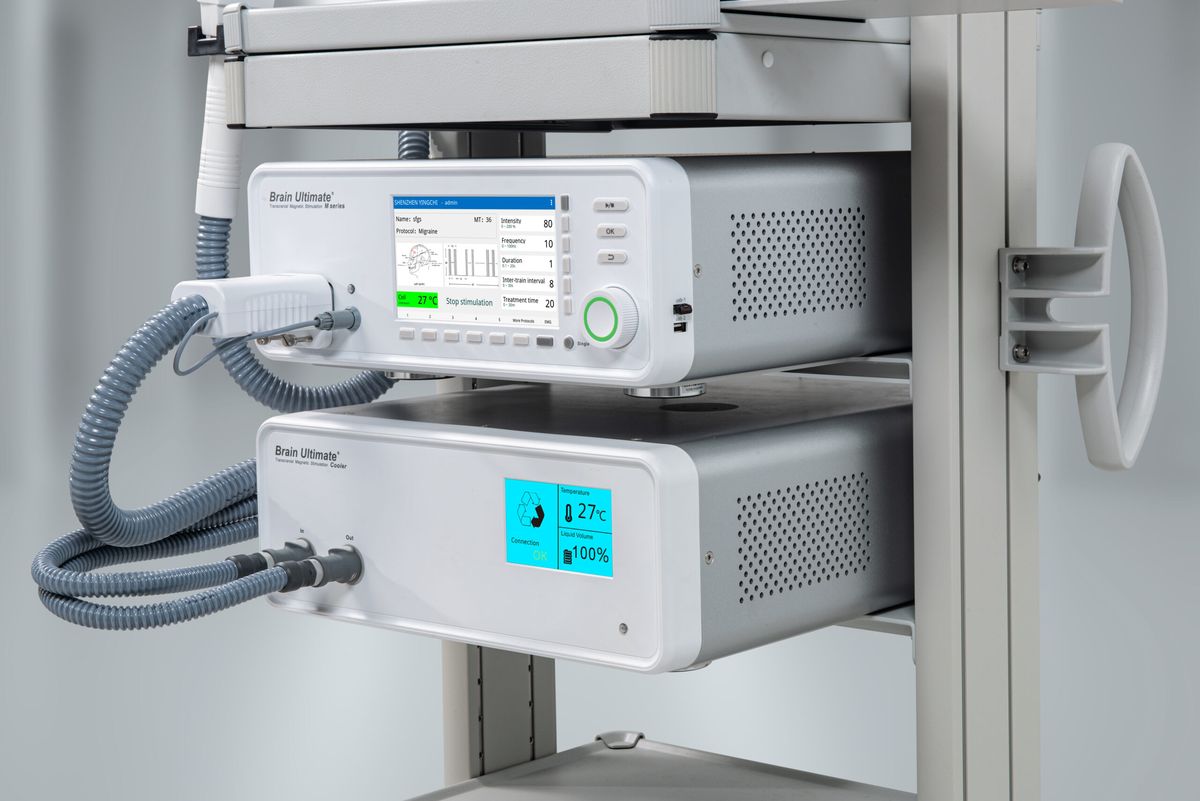
BrainUltimate M-Series
Our primary clinical TMS platform, FDA-cleared for major depressive disorder. Coil positioning uses standardized measurement caps, so your treatment target is set the same way at every session. Protocols on this platform range from standard sessions of about 19 minutes to intermittent theta burst stimulation (iTBS), a cleared protocol that runs in just a few minutes.
The BrainUltimate page →
BTL Exomind
A newer, comfort-forward TMS system, FDA-cleared for depression in adults whose antidepressant medication hasn't been enough. Sessions run under 30 minutes in a chair designed for sitting comfortably, walk in and walk out.
Exomind, self-pay with a stated price →Which system and which protocol fit you is a clinical decision made at consultation. The safety screening is identical either way. Equipment photos on this page come from the manufacturers.
What starting looks like
The first week, plainly.
1
Consultation and screening
History, medications, seizure risk, and implants get reviewed. Some histories rule TMS out, and you'd hear that here, with the reasoning.
2
Mapping
The first session sets your treatment target with standardized measurement caps and finds the right stimulation level for you.
3
Brief weekday sessions
You're awake and seated for each one, then you drive yourself home. Most people go straight back to work or their day.
4
The routine settles
Scalp discomfort and headache, when they happen, usually ease over the first sessions. The course becomes part of a normal week.
Worth clearing up
Three things TMS is not.
The worry
It's like ECT.
What's true
No. TMS uses magnetic pulses while you sit awake. No anesthesia, no sedation, and it's a different treatment from ECT entirely.
The worry
I'll be out of commission after sessions.
What's true
You drive yourself to and from every session, and most people go straight back to their day.
The worry
Magnets sound like wellness theater.
What's true
TMS has been FDA-cleared for major depressive disorder since 2008, and both systems here carry their own clearances.
Before anyone says yes
What screening actually asks about.
The consultation isn't a formality on the way to a sale. These are the questions it works through, and honest answers are what make the recommendation worth having.
None of this is a quiz to pass. It's how the consultation earns a yes, a no, or a better idea.
- Seizure history, and anything that raises seizure risk
- Metal in or near the head, implants, and implanted devices
- Current medications and how they interact
- Neurological history
- Sleep, and anything that has been changing it
Who it's for, and who it isn't
Who considers TMS
Candidates typically have depression symptoms that have not fully improved with standard treatment, haven't tolerated medications well, or want a noninvasive, non-sedating option.
Safety screening comes first
Before any course, screening covers seizure risk, metal implants, implanted devices, and other neurological considerations. Some histories rule TMS out, and the consultation won't dance around it.
Not a first resort
It enters the conversation after standard treatment has had a fair shot. If you haven't had a real medication trial yet, that usually comes first, and the consultation will say so.
Side effects
What it feels like, honestly.
Scalp discomfort at the treatment site and headache are the most common side effects, mostly in the first sessions, and they usually settle as the course goes on. Plain over-the-counter pain relief handles it for most people.
The serious risk to know about is seizure. It's rare, and it's exactly why screening for seizure history and risk factors happens before anyone starts. If your history raises the risk, you'll hear a no, with the reasoning.
Where TMS fits
One of several tools.
For depression that has resisted standard treatment, the realistic menu usually includes medication changes, therapy, TMS, and Spravato. They differ in time commitment, side effect profiles, screening gates, and insurance rules.
The consultation walks that menu with your actual history on the table, and the recommendation you leave with may or may not be TMS. Spravato has its own page if you want to compare before you come in.
Common questions
Does TMS hurt?
Most people describe the pulses as a tapping sensation on the scalp. Scalp discomfort and headache are the common early side effects, and they usually ease over the first sessions.
Can I drive and work during a TMS course?
Yes. There's no sedation, so you drive yourself to and from sessions, and most people go straight back to their day.
How fast does TMS work?
Response varies. Some patients notice improvement during the treatment course, while others need more time. Anyone promising a specific week is guessing.
Which machine will I be treated on?
That gets set at the consultation, based on your protocol and treatment plan. Both systems are FDA-cleared for depression, and the safety screening is the same for each.
Does insurance cover TMS?
Often, with conditions. TMS usually requires prior authorization and documentation of medical necessity, and plans differ on both. Coverage is not guaranteed until benefits are verified.
What does TMS cost without insurance?
Course costs depend on the treatment plan, so numbers get discussed at the consultation after benefits are checked. Bring your insurance details and you'll leave knowing where you stand.
Will TMS replace my current treatment?
Not automatically. TMS is considered alongside your existing plan, and the consultation covers what continues, what changes, and what gets watched during a course.
Find out if TMS fits your history.
A consultation gives you a direct answer and a plan either way.
This page is educational and does not guarantee eligibility, access, insurance coverage, or a specific treatment outcome.